Follow the Music: Natchez and the Mississippi Blues Trail
Follow the Music
Natchez and the Mississippi Blues Trail
When people think about Mississippi and the blues, their minds often travel north to the Delta, Clarksdale, and those legendary stretches of Highway 61. All of those places deserve their place in music history, but Highway 61 continues south, right through Natchez.
Visitors know Natchez for its historic homes, the Mississippi River, the Natchez Trace, and more than three centuries of history. What sometimes surprises them is just how much music is woven into that story. Blues, jazz, gospel, rhythm and blues, and later rock and roll all have connections to Natchez and the communities just across the river in Louisiana.
Natchez has four official Mississippi Blues Trail markers, along with the Rhythm Night Club Memorial Museum and other local markers that help tell the larger story. Visitors can explore them comfortably in a morning or afternoon, following a route through several of the city's historic neighborhoods and downtown.
Rather than simply driving from marker to marker, take time to read the stories, explore the neighborhoods, and notice how often the same names and places appear. Each stop adds another piece to the remarkable musical history of Natchez and the Miss-Lou.
Begin on St. Catherine Street
Rhythm Night Club Memorial Museum 5 St. Catherine Street, Natchez, MS 39120
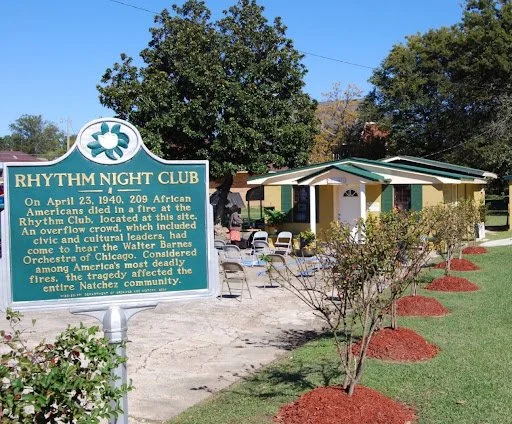
Begin at the Rhythm Night Club Memorial Museum , which stands on the actual site of the Rhythm Club, where one of the most devastating events in Natchez history occurred on April 23, 1940.
That evening, a large crowd had gathered to hear Walter Barnes and his Royal Creolians, a popular Chicago orchestra. A fire swept through the building, killing more than 200 people, including Barnes and members of his band. The tragedy devastated Natchez's Black community and later became part of blues history through songs recorded by musicians including Howlin' Wolf and John Lee Hooker.
The museum was created by Monroe and Betty Sago to honor both those who died and the survivors. Its exhibits include photographs, newspaper accounts, recorded memories, documents, and music connected to that night. Guided tours are available and highly recommended, offering visitors a deeper understanding of the tragedy and its lasting impact on the community.
This is a difficult chapter of Natchez history, but an important one to remember. The museum also honors the people who gathered at the Rhythm Club and the music, dancing, friendship, and community that brought them together.
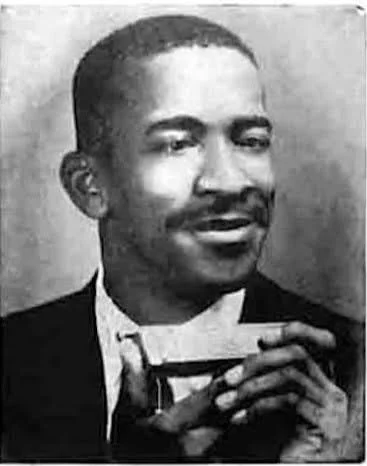
Papa Lightfoot and the Music of St. Catherine Street
Papa Lightfoot and the Natchez Blues Jack Waite Park, McCabe Street, Natchez, MS
From the museum, continue a short distance to Jack Waite Park on McCabe Street, where the Mississippi Blues Trail marker for Papa Lightfoot and the Natchez Blues celebrates one of Natchez's best-known blues musicians.
Alexander "Papa George" Lightfoot was born in Natchez in 1924 and became known for his distinctive blues harmonica playing. He recorded during the 1950s and later returned to the studio for an album with the wonderfully appropriate title Natchez Trace.
The marker tells a story that reaches well beyond one musician. It highlights the larger African American music community around St. Catherine Street, where blues, gospel, jazz, rhythm and blues, and dance music were part of neighborhood life. Local cafés, clubs, churches, and gathering places helped create a musical community that shaped generations of performers.
While exploring the neighborhood, look for the local Music on St. Catherine Street marker at approximately 180 St. Catherine Street. It introduces several musicians connected to this area and offers another glimpse into the neighborhood's rich musical heritage.
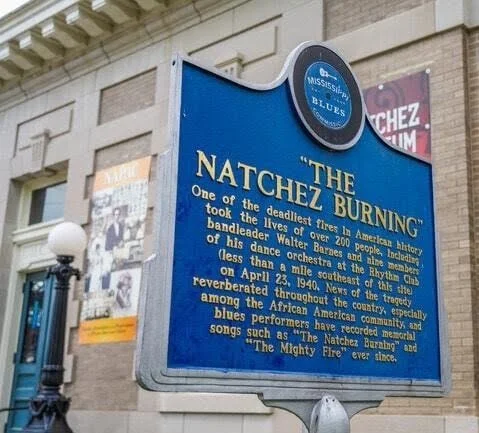
Natchez Burning
The Natchez Burning Mississippi Blues Trail Marker 301 Main Street, Natchez, MS 39120
From St. Catherine Street, head downtown to 301 Main Street, near the Natchez Museum of African American History and Culture. Here, the official Mississippi Blues Trail marker titled The Natchez Burning commemorates the Rhythm Club fire and its place in American music history.
The marker recounts the events of April 23, 1940, and explores how the tragedy became part of blues history through songs recorded by musicians including Howlin' Wolf and John Lee Hooker. Together, the marker and the Rhythm Night Club Memorial Museum offer different perspectives on the same event, preserving both the personal stories of those affected and the tragedy's lasting musical legacy.
While downtown, consider visiting the Natchez Museum of African American History and Culture. Its exhibits provide a broader understanding of Black life, business, culture, faith, and community in Natchez, offering important historical context for the city's musical heritage.
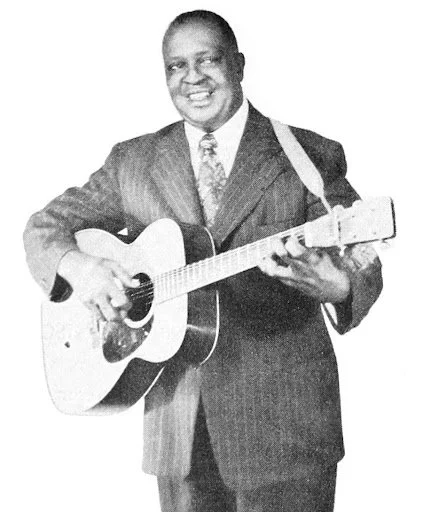
Bud Scott
Bud Scott Mississippi Blues Trail Marker 407 Main Street, Natchez, MS 39120
Continue one block farther along Main Street to the Bud Scott Mississippi Blues Trail marker , which honors Clarence "Bud" Scott, one of Natchez's influential early bandleaders.
Scott's orchestra entertained audiences throughout Mississippi and Louisiana beginning around the turn of the twentieth century. As popular music evolved, the band adapted, moving through ragtime, jazz, and swing while remaining an important part of the region's entertainment scene.
The Scott family's story also connects directly to the Rhythm Club tragedy. His son, Clarence "Bud" Scott Jr., later led the orchestra and was among those who died in the 1940 fire.
This connection illustrates how closely the musicians, neighborhoods, and events of Natchez's musical history are intertwined. Each marker adds another chapter to a larger story that spans generations.
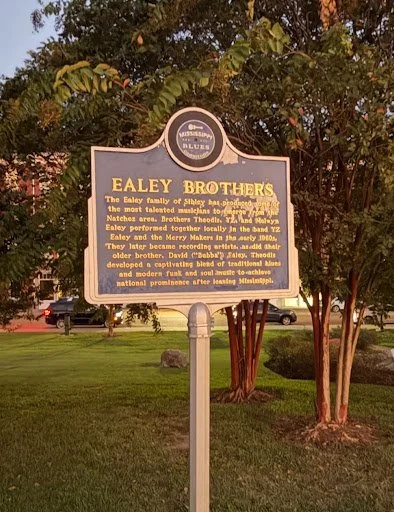
The Ealey Brothers on the Bluff
Ealey Brothers Mississippi Blues Trail Marker 111 South Broadway, Bluff Park, Natchez, MS 39120
Finish the Natchez portion of the trail at the Ealey Brothers marker in Bluff Park, overlooking the Mississippi River.
The marker honors brothers David "Bubba," Y.Z., Melwyn, and Theodis Ealey, who came from nearby Sibley and carried the music of southwest Mississippi far beyond the region. Members of the family performed at Haney's Big House in Ferriday, Louisiana, one of the area's best-known Black music clubs.
Their story reflects the close musical connections between Mississippi and Louisiana. For generations, performers, audiences, and musical traditions traveled back and forth across the river, contributing to the distinctive musical heritage of the Miss-Lou.
Bluff Park also offers one of the most beautiful views of the Mississippi River in Natchez, making it a lovely place to pause before continuing the journey.
Have a Little More Time? Cross the River
Delta Music Museum 218 Louisiana Avenue, Ferriday, LA 71334
For visitors with a little extra time, a trip across the Mississippi River to the Delta Music Museum in Ferriday, Louisiana, makes a wonderful addition to the trail.
The museum celebrates musicians connected to blues, soul, gospel, country, rockabilly, and rock and roll. It is also the first Louisiana location to receive a Mississippi Blues Trail designation.
Ferriday's musical history is remarkable for such a small community, and the museum explores the connections among the musicians and musical styles that developed on both sides of the river. Its exhibits also share the story of Haney's Big House, the legendary Ferriday club that attracted major performers and influenced musicians throughout the region.
The Delta Music Museum provides a fitting conclusion to a journey through the musical history of Natchez and the surrounding Miss-Lou.
And Then Go Hear Some Music
One of the best parts of exploring Natchez's musical history is discovering that music here is not just something preserved on a historical marker. Live music remains an important part of the Natchez experience, with performances taking place in historic buildings, downtown restaurants, local bars, festivals, and special events.
Depending on the evening, visitors may find live music at Smoot's Grocery Blues Lounge, Biscuits & Blues, Under the Hill Saloon, or another downtown venue. Performers and schedules change regularly, so checking current local listings is always a good idea.
A day spent following the music offers a wonderful way to experience Natchez. Begin with a little history, explore the city's neighborhoods and downtown, enjoy the Mississippi River views, stop for a good meal, and finish the evening listening to live music.
There is a great deal of history packed into this little river city, and not all of it is found inside its historic homes. Some of it is written in songs, remembered in neighborhood stories, preserved in museums, and marked by those familiar blue signs that are easy to drive past without stopping to read.
The next time you visit Natchez, take a little time to follow the music. You may be surprised by just how much musical history has been here all along.
Quick Route for Your Map App
Rhythm Night Club Memorial Museum: 5 St. Catherine Street, Natchez, MS 39120
Papa Lightfoot and the Natchez Blues: Jack Waite Park, McCabe Street, Natchez
Music on St. Catherine Street: Approximately 180 St. Catherine Street, Natchez
The Natchez Burning: 301 Main Street, Natchez
Bud Scott: 407 Main Street, Natchez
Ealey Brothers: 111 South Broadway, Natchez
Optional Ferriday stop: Delta Music Museum, 218 Louisiana Avenue, Ferriday, LA 71334